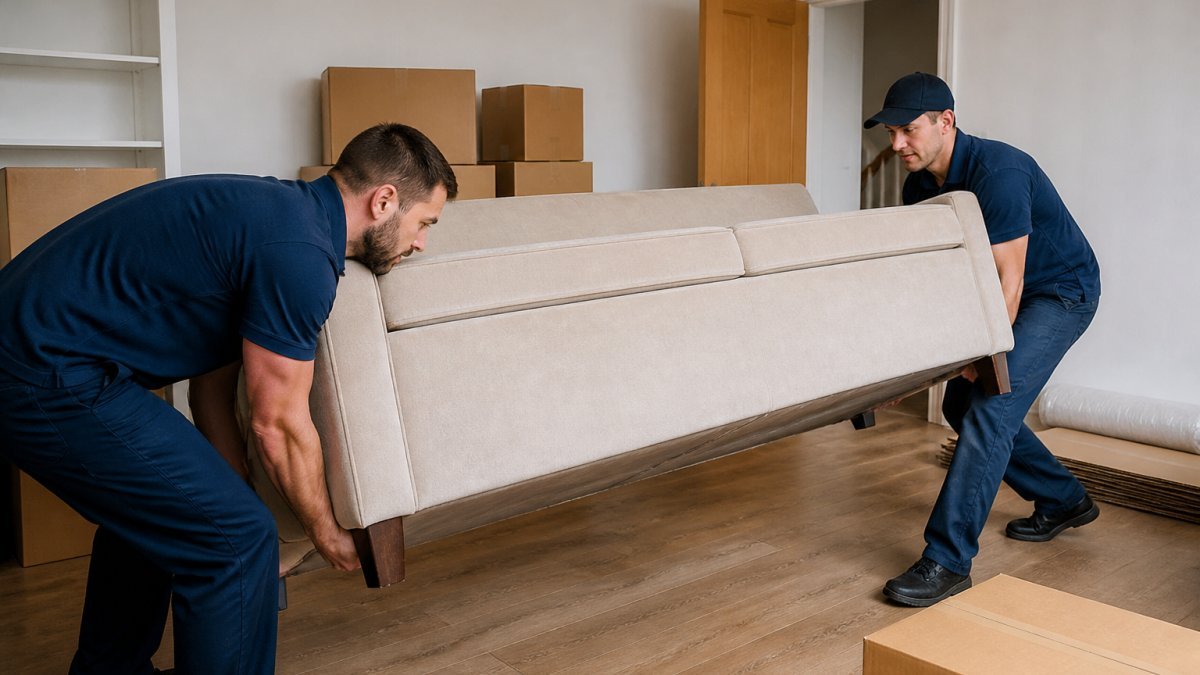
How Do You Move Heavy Furniture Without Breaking It?
Last Updated: 1 November 2026
Quick Summary
You move heavy furniture without breaking it by planning the route first: measure every doorway and stairwell, dismantle what you can, and use lifting straps and sliders rather than carrying the weight. Lift rather than drag, share the load between two people, and protect floors and frames along the way.
- Walk and measure the full route, including doorways and stairwell turns, before lifting anything.
- Photograph each piece before dismantling it and tape a labelled bag of fixings to it.
- On stairs, the person at the bottom takes the heavier end and you take one step at a time.
- Taking a door off its hinges gains a few centimetres when a piece will not fit.
- Book professional help for pianos, safes, large wardrobes or routes with narrow turns.
Table of Contents
- Before You Lift: Planning a Heavy Furniture Move
- Furniture Moving Equipment That Actually Helps
- How to Dismantle Furniture for Moving
- How to Protect Floors When Moving Furniture
- Moving Furniture Up and Down Stairs Safely
- Getting Heavy Furniture Through Narrow Doorways
- When to Book Professional Help for Heavy Furniture
- Frequently Asked Questions
Before You Lift: Planning a Heavy Furniture Move
Moving house with heavy furniture is where most home moves go wrong. A wardrobe that will not clear a doorway, a sofa that gouges a wall, a back that gives out halfway down the stairs: these problems are almost always planning failures, not strength failures. The moves that go smoothly are usually the ones where someone walked the route before anyone lifted a thing.
Start with a clear plan. This is the difference between an hour of careful work and a day of damage control.
- Walk the full route from old room to new room, including halls, stairs and doorways
- Measure every doorway, stairwell turn and lift opening
- Measure the furniture at its widest point, not its footprint
- Decide what gets dismantled before moving day
- Book parking close to both entrances where possible
A comprehensive moving checklist helps you sequence the whole move around the heavy items rather than squeezing them in at the end. If you want a full room-by-room plan, our moving checklist covers decluttering, packing and the final week.
Watch out: measuring a sofa’s width but forgetting its depth is the classic error. A piece can be narrow enough for the frame and still too deep to pivot around a stair corner.
Furniture Moving Equipment That Actually Helps
The right kit turns a two-person struggle into a controlled lift. You do not need much, but you do need the right things.
Furniture moving equipment is the collection of straps, sliders and lifting aids that let you move weight safely instead of carrying it in your arms. A few items earn their place:
- Lifting straps: take the strain off your back and let two people share the load
- Furniture sliders: glides for carpets and hard floors, ideal for sofas and wardrobes
- A sack truck or hand trolley: for boxes and smaller cabinets
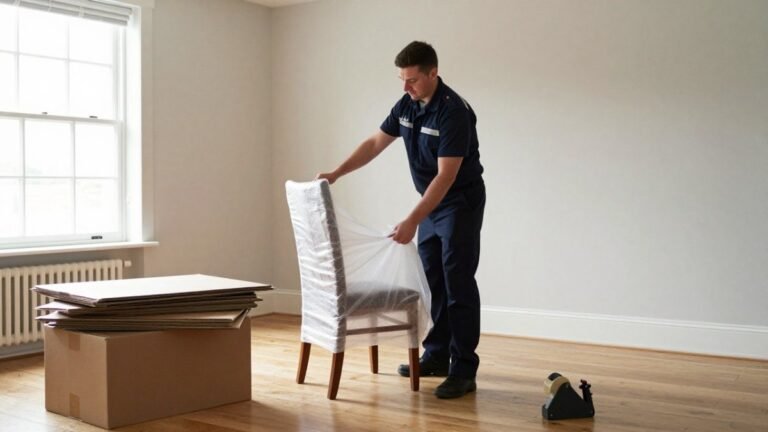
- Protective blankets and stretch wrap: to stop scratches and keep doors shut
- A basic tool kit: screwdrivers, an Allen key set and a mallet
Skip the gimmicks. Most cheap lifting gadgets fail under real weight. A good pair of straps and a set of sliders will do more than a trolley full of novelty tools.
A short kit of proven items does more than a trolley full of novelty tools.
| Item | Best for | Key difference |
|---|---|---|
| Lifting straps | Sharing the load between two people | Take the strain off your back |
| Furniture sliders | Sofas and wardrobes | Glides for carpets and hard floors |
| Sack truck or hand trolley | Boxes and smaller cabinets | Carries rather than lifts |
| Protective blankets and stretch wrap | Preventing scratches | Keeps doors shut |
| Basic tool kit | Dismantling and reassembly | Screwdrivers, Allen keys and a mallet |
How to Dismantle Furniture for Moving
Taking furniture apart is often the only way to get it out safely, and it makes the whole move lighter. Do it methodically and keep every fixing.
- Clear everything out of drawers and shelves first
- Photograph the piece before you touch a screw
- Bag screws and fixings and tape the bag to the piece
- Remove doors, drawers and shelves
- Take the piece apart in the reverse order it was built
Keep the manual if you have it. Flat-pack furniture rarely survives a move assembled, and the fixings are easy to lose. Bag them, label them and keep them with the item.
While you are packing the parts, protect any glass, mirrors or fragile panels properly. Our guide on how to pack fragile items for moving covers wrapping and boxing techniques that stop breakages.
How to Protect Floors When Moving Furniture
Floors take the hit in most moves. A dragged wardrobe will mark hardwood, and a sofa leg will dent vinyl. Protecting the route is quick and cheap.
Protecting floors when moving furniture means covering the path before anything heavy travels along it. Use these layers:
- Felt pads under every leg that stays on the floor
- Moving blankets or cardboard along the main route
- Floor runners on hard floors and carpet
- Sliders so nothing gets dragged
Lift, do not drag. Even with protection, dragging puts stress on joints and legs. Get help and carry the weight, or use sliders so the piece glides.
Watch out: cardboard on a smooth floor can slide out from under a heavy item. Tape it down or use proper runners.
Moving Furniture Up and Down Stairs Safely
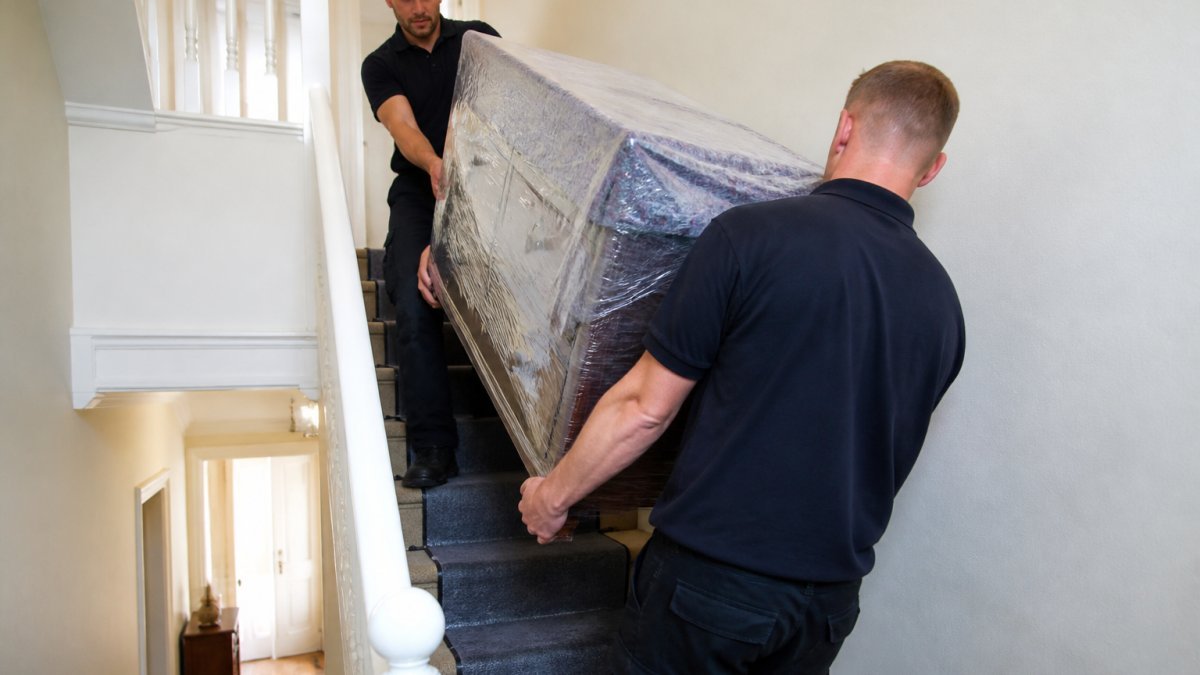
Stairs are where most injuries and most damage happen. The rule is simple: one person leads, one follows, and the heavier end goes at the bottom.
Moving furniture up and down stairs safely means controlling the weight and keeping the route clear. Here is how:
- Clear the stairs completely before you start
- Use lifting straps so both people share the load
- The person at the bottom takes the heavier end
- Keep the piece tilted so the base clears each step
- Take it one step at a time and talk to each other
Never rush a staircase. A slip on the stairs is the most common way furniture gets broken and people get hurt. If the piece is too big or too heavy for two people, stop and get more help.
Getting Heavy Furniture Through Narrow Doorways
Narrow doorways stop more moves than stairs do. The trick is to remove what you can and angle what you cannot.
- Take the door off its hinges to gain a few centimetres
- Remove furniture legs, arms or doors where they detach
- Measure the diagonal, not just the width
- Angle the piece so its narrowest side goes through first
- Protect the frame with blankets as it passes
Sometimes a piece simply will not fit, no matter how you angle it. A window removal or a partial dismantle may be the only route. That is the point to call in people who do this every day.
When to Book Professional Help for Heavy Furniture
Some moves are best handled by a team. If any of these sound familiar, professional help will save you time, damage and a bad back:
- The piece will not fit through a doorway or up the stairs
- You are moving a piano, safe, or very large wardrobe
- You have stairs and narrow turns on the route
- You are short on people or time
- You have antiques or fragile items you cannot risk
A professional team brings the straps, sliders and experience to move heavy items without damage. Daddy Removals offers professional removal services for house, flat and office moves. Packing, dismantling and reassembly are among the services available, and you can request a free removal quote through a personalised video survey or home visit. If you would rather talk it through, you can contact our team directly.
Frequently Asked Questions
Is it safe to move heavy furniture by yourself?
For anything heavier than a small bedside table, no. A two-person lift keeps the weight close to the body and halves the strain on your back and shoulders. Wardrobes, sofas, pianos and American-style fridge freezers should always be handled by two people at minimum, and often three on stairs. If you have any doubt about the weight or your route, book a professional team. Daddy Removals offers personalised quotes via home visits or video surveys, so the team can see what is being moved before moving day.
What furniture moving equipment do you need for a house move?
The basics are a furniture dolly or sack trolley, four or more heavy-duty moving blankets, stretch wrap, ratchet straps, a set of Allen keys and screwdrivers, and floor protection such as hardboard sheets or a cotton stair runner. Sliders or furniture glides help on hard floors but are not suitable on carpet. For stairs, a strap or harness lets one person take the top weight while the other guides the base. You can hire most of this from local tool hire shops for a day rather than buying it.
Should you dismantle furniture before moving house?
Yes, for most large items. Beds, wardrobes, flat-pack shelving and dining tables are far easier and safer to move in pieces. Remove drawers, shelves and glass panels first, bag the fixings and tape them to the relevant part. Label each panel with a letter or number so reassembly is quick. Leave solid antique pieces assembled unless a professional advises otherwise, because dismantling can damage joints. Daddy Removals offers dismantling and reassembly as part of its services.
How do you get heavy furniture through a narrow doorway?
Measure the doorway and the item before moving day, then remove the door from its hinges if it is tight. Take off handles, knobs and legs where possible. Tilt the item so its narrowest side goes through first, and use a blanket over the door frame to prevent scrapes. If the item still will not fit, you may need to remove a window or go through a wider entrance. A professional survey can flag these access issues before the day.
Heavy furniture does not have to mean a stressful move. Plan the route, get the right kit, and know when to hand it over to people who do it every day. Daddy Removals provides fully insured removals with careful handling, flexible quoting and secure storage if your new place is not ready. Get started with Daddy Removals and move your heaviest pieces without the damage or the worry.